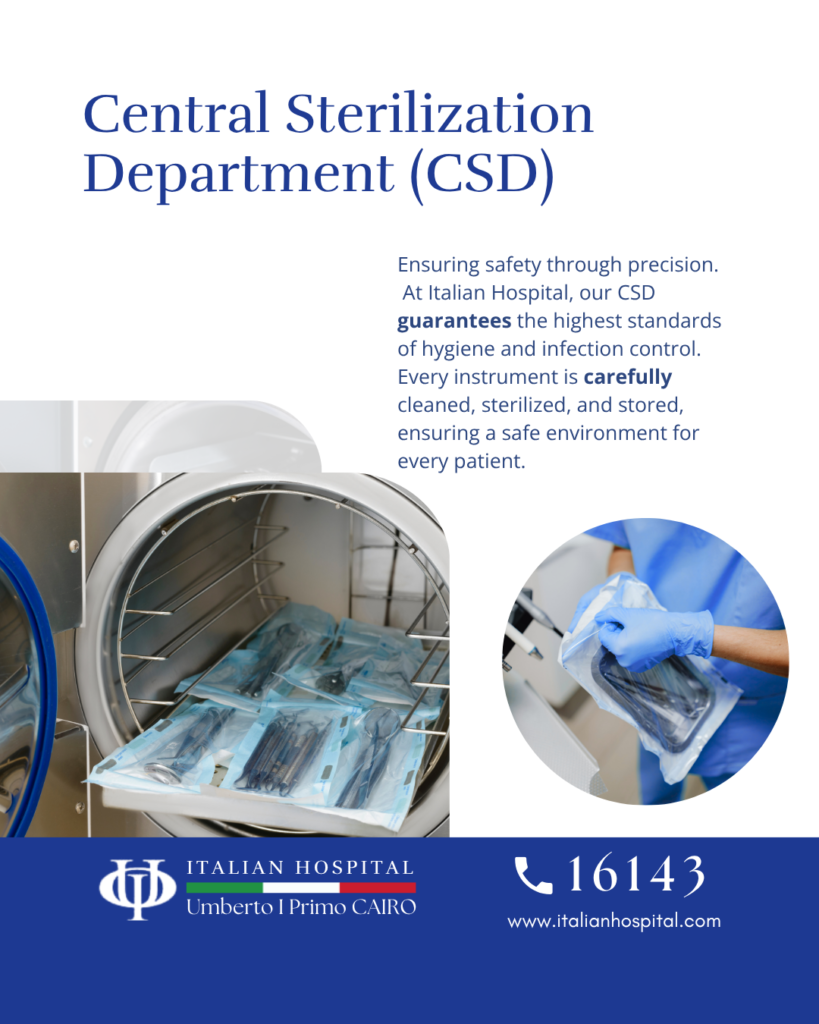
In every modern healthcare facility, patient safety begins long before any medical procedure takes place. At the heart of this process is the Central Sterilization Department (CSD), a vital unit responsible for ensuring that all reusable medical instruments are clean, safe, and sterile before reaching patients.
What is the CSD?
The Central Sterilization Department is a specialized unit responsible for the cleaning, disinfection, sterilization, and packaging of all reusable medical instruments used across the hospital.
Through strict protocols, advanced technology, and highly trained staff, the CSD ensures that every instrument entering operating rooms, emergency units, and inpatient departments meets international safety standards.
Key Steps of the Sterilization Process
1. Reception and Sorting
Used instruments are collected in secure containers and delivered to the CSD.
They are then sorted based on their type, level of criticality, and required sterilization process. Each instrument is inspected for any damage or abnormalities.
2. Cleaning and Disinfection
This is one of the most crucial steps.
The CSD uses:
- Automated washer–disinfectors
- Ultrasonic cleaning systems
- High-grade medical detergents and disinfectants
The goal is to completely remove all organic and biological residues before sterilization.
3. Inspection and Assembly
Once cleaned, each instrument is carefully inspected.
Surgical sets are reassembled according to strict protocols to ensure accuracy and completeness for medical teams.
4. Packaging and Sealing
Instruments are packed in sterile wraps, pouches, or container systems that preserve sterility until the moment of use.
5. Sterilization
The CSD uses different sterilization methods depending on the nature of the instrument:
- Steam sterilization (Autoclave) – the most common method
- Low-temperature sterilization (H₂O₂ plasma, peroxide)
- Ethylene oxide (ETO) – for heat-sensitive equipment
All cycles are monitored, recorded, and validated to maintain the highest safety standards.
6. Storage and Distribution
Sterile instruments are stored in controlled areas and distributed to operating rooms, emergency units, and other departments according to demand.
Why Is the CSD So Important?
✔ Prevention of healthcare-associated infections
Proper sterilization dramatically reduces infection risks for patients.
✔ Maximum patient safety
Every instrument used during a procedure meets international standards.
✔ Support for surgical and medical teams
The CSD ensures constant availability of sterile, ready-to-use instruments.
✔ Full traceability
Each instrument can be tracked from use to re-sterilization, ensuring transparency and accountability.
A Department of Precision and Responsibility
The Central Sterilization Department is far more than a cleaning unit.
It is a highly specialized, mission-critical department that requires advanced technology, strict adherence to protocols, and a skilled professional team.
Through its work, the CSD ensures a safe environment for both medical teams and patients—making it one of the most essential pillars of hospital quality and safety.
0 Comments