
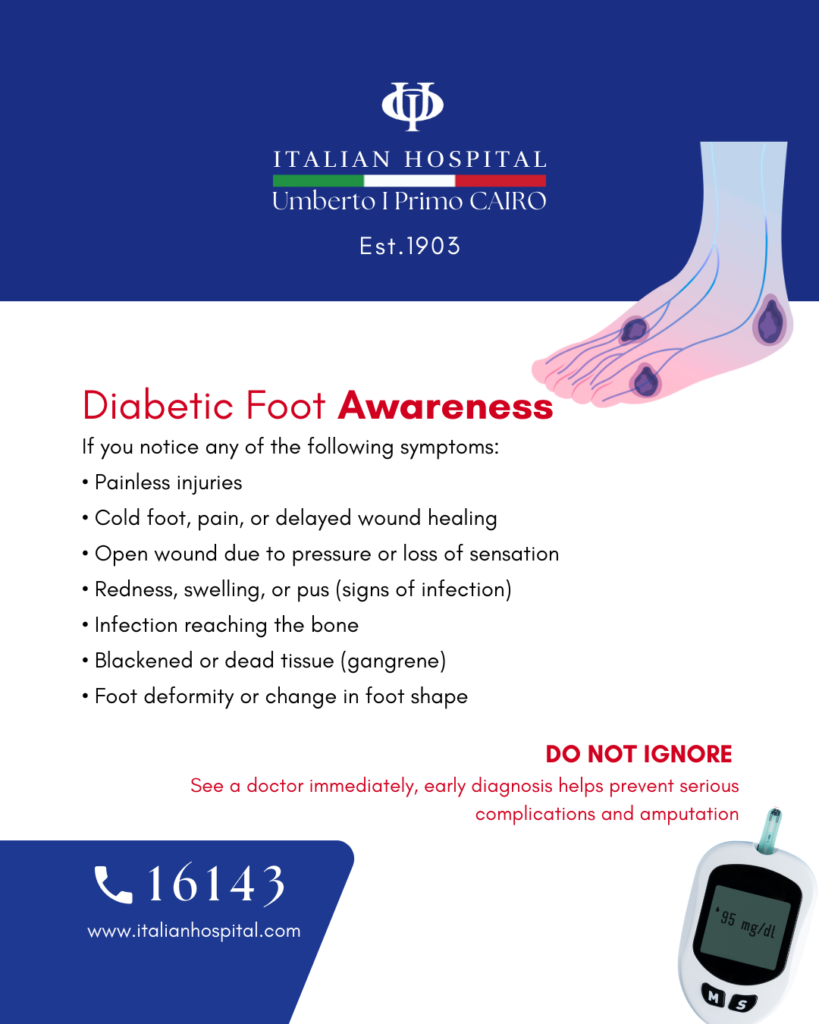

Early Detection Can Save Limbs and Lives
Diabetes can affect many parts of the body, but one of its most serious complications involves the feet. Reduced blood circulation and nerve damage (diabetic neuropathy) can make even small injuries go unnoticed and untreated. Without early medical care, minor wounds may quickly develop into serious infections that can lead to hospitalization — or even amputation.
Raising awareness about diabetic foot symptoms is essential for prevention and early intervention.
Warning Signs You Should Never Ignore
If you notice any of the following symptoms, seek medical attention immediately:
- Painless injuries – Cuts, blisters, or sores that cause little or no pain due to nerve damage.
- Cold foot, persistent pain, or delayed wound healing – Signs of poor blood circulation.
- Open wounds caused by pressure or loss of sensation – Especially on the sole of the foot.
- Redness, swelling, or pus – Possible signs of infection.
- Infection reaching the bone – A serious condition known as osteomyelitis.
- Blackened or dead tissue (gangrene) – A medical emergency requiring urgent care.
- Foot deformity or change in foot shape – May indicate Charcot foot or structural damage.
Ignoring these symptoms can result in severe complications. Early diagnosis significantly reduces the risk of long-term damage and amputation.
Why Early Diagnosis Matters
Many diabetic foot complications begin silently. Because nerve damage reduces pain sensation, patients may not realize there is a problem until it becomes severe. Routine foot checks and early medical evaluation allow doctors to:
- Detect circulation problems
- Treat infections before they spread
- Prevent tissue damage
- Reduce the risk of surgery or amputation
Prompt care can make the difference between simple treatment and life-altering complications.
Prevention Tips for Diabetic Patients
Prevention is always better than treatment. If you have diabetes:
- Inspect your feet daily for cuts, redness, or swelling
- Keep your feet clean and dry
- Wear comfortable, protective footwear
- Avoid walking barefoot
- Control blood sugar levels carefully
- Schedule regular medical check-ups
Take Action Today
Diabetic foot complications are preventable with awareness, vigilance, and early medical care. If you notice any unusual symptoms, do not wait. Consulting a healthcare professional promptly can protect your health and preserve your mobility.
Your feet carry you every day — take care of them.
0 Comments